Being a good reviewer of books comes with great responsibility. I recently read that Australian book reviewers are poor at their job, perhaps not being intellectual enough to read deeply into the prose and narrative at hand, or perhaps too lazy in analyzing the writing enough; I don't know?
Considering I'm an Australian reviewer of books, I have to say I'm a little concerned, and now left questioning my own abilities as to whether I'm in fact a good or bad reviewer. So, with that said, I've done a little research on what makes a good reviewer, and luckily enough I think I'm following the basic rules in giving the books I read justice, along with providing potential readers enough guts for them to establish if these books are for them.
Here, I want to share some of the golden rules of reviewing I've learn't and continue to build on when I'm writing my reviews; after all practice makes perfect so they say.
My take on Golden Rules for Reviewing:
1. Make every review engaging, up-beat and a pleasure for others to read.
2. Include, where you can, a taste of the prose and narrative (this gives the reader an idea if they would want to buy the book). I actually truly believe in this rule. For one, I always read part of a chapter of a book I think I might be interested in when I pick-up a copy in a bookshop, just so I know if I like the style of writing; this is the same philosophy.
3. Understand and convey what you believe the author wishes to deliver to the reader through their writing. Here, you can provide a direct quotation.
4. Don't place too much emphasis on the plot summary and never, ever give away the ending.
5. Never make a review about the writer or the reviewer, a review is for the reader. It's about sharing ideas and information gathered through your reading, providing entertainment and education for the reader.
6. And always provide an honest review. What I mean by honest is if you didn't think the book works or conveys what is intended, then it is your job to tell the reader why, and show them evidence of your conclusion. Your job is not, however, to criticise the writer.
Reading is such a great pleasure to so many of us, so reviewers need to be committed, knowledgeable and just as scrupulous as their readers to remain successful at what they do.
Saturday, 30 June 2018
Sunday, 17 June 2018
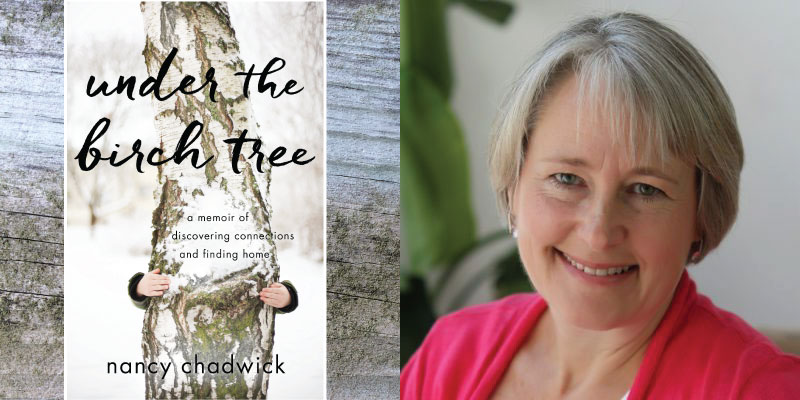
Author Interview with Nancy Chadwick for San Francisco Book Review
Interview With Nancy Chadwick, author of Under the Birch Tree
by Meredith Grant | Jun 13, 2018 | Author Interviews, Written
I had the pleasure of reading and reviewing Under the Birch Tree for San Francisco Book Review. Below is the written interview with Nancy on her upcoming publication this month, I hope you enjoy Nancy's insights and experiences she shares with us.
What first inspired you to write your story?
There was something about trees. When I was a young girl, maybe eight or ten, I was a walker who enjoyed the outdoors, just roaming around and exploring. I liked to walk around the perimeter of my house, starting and ending at the front where my favorite tree, a birch, grew. I loved that tree, especially because of how it looked with its peeling white bark and wavy slender leaves. It always reminded me of home; they were one and the same. I felt strongly about establishing one’s roots and a sense of belonging and home that my early steps around the foundation of my home became an idea worth developing.
Under the Birch Tree is all about discovering connections and finding home; tell us how and why the family homes birch tree became a main source of connection and companionship for you?
I connected to this tree for a couple of reasons. First, I connected to it because of its very nature. The birch tree is associated with spring and new beginnings and appears light and clear and flexible and can also be reactive to external situations – water, light, temperature. That is why my birch buddy is woven throughout my story. It became a metaphor for my self-discovery for finding home. When I would spot a tree, instant memories put me back to a place I associated with comfort, security and the familiar.
How did you find the writing process for Under the Birch Tree? Did it come easily? Did you find it evoked any unwanted emotions?
I wrote the first draft over ten years ago and it consisted of memories of experiences. Writing the events was the easy part. The more difficult part was figuring out why I remembered what I did and what sense it made. The process was emotional and, wanted or not, it was important that all my emotions played out. My emotions were my voice.
You started the writing process for Under the Birch Tree some time ago, what motivated you to publish it now? And how did you decide on the title?
My goal was to not publish a book, but rather was, and still is, an intent to connect, in the large and small sense of the word, not only with myself but also with others who could identify with similar experiences. I held back in believing in my story because of the types of memoirs I saw published, something my memoir was not. I was looking for complicated significance to my story when really it was quite simple. That was my go-ahead, my motivation, when I realized story-telling didn’t have to be complicated, but could be simple too. I decided on the title, an easy decision, because what happened under the birch tree was such a loud and clear metaphor for the disconnections I faced in my life and losing my sense of place and belonging.
How did you turn your book around from almost being an autobiography to becoming a memoir? What tips can you give other writer’s facing a similar obstacle.
I had to focus threading my central theme consistently throughout, having a clear voice, and writing good descriptive scenes and dialogue where appropriate. My inner dialogue spoken through with reflection was also key to being authentic to my readers. My best tip for other writers would be that it’s okay for a writer to start with autobiography, to write all those things that is remembered but steps must be taken beyond that to rewrite and rewrite until a theme becomes clear and then reflections can be recorded.
You started your career completing a degree in Journalism, was it always an ambition of yours to become a writer?
No, my ambition wasn’t to become a writer. I wanted to be in advertising, to write mini-stories to sell products, and my studies in that field were in the College of Journalism.
What sort of editorial changes, if any, did the manuscript need to go through?
The manuscript went through a few editorial changes, the most common was about sequence of events and timing. I tended to move around in time, without explaining how I got to each place. I also needed to clear some contradictions (all part of finding the reflections!), and fill in gaps of badly needed inner dialogue.
How have you found the publishing process to be? Did you approach the publisher and what made you choose them?
I contacted Brooke Warner (at Warner Coaching) about four years ago with the request for a professional critique of the manuscript. As per her suggestions and comments, I rewrote the manuscript, working with a developmental editor, who asked if I was going to publish with She Writes Press. The question surprised me as I was sure the manuscript would always need work and wasn’t quite ready to be published. Brooke Warner is She Writes Press so one thing led to another, rather quickly, and the rest, as they say, was history!
Can you see yourself writing another book in the near future, and if so, what genre would it be and why?
I am already starting on my second book. It will be another memoir with further developing themes with more inspirational insight and picking up from where I left off from book one. Book one has many legs and I’d like to take a couple of them and run with it!
Finally, what advice would you give to anyone already working on, or thinking about writing their memoir?
Memoirs get such a bad rap sometimes. Memoirs can be pigeonholed into what they are and/or are not so much so that this can be discouraging for a writer to let it all out, questioning if they, indeed, have a memoir. There’s no right or wrong. I happen to have a quiet memoir, untraditional to the traditional single-incident story of something horribly tragic, abuse of some kind, a health issue, death, to name just a few. I write about my experiences that most can identify with and because of this, I hope my reader can see her own self-discovery through the narration of my own. Lastly, I tell to-be memoirists to just write. Get your thoughts and feelings and emotions down into words. Write as if you are talking to your best friend, your confidant. It’s not as a daunting task as you would think.
Thank you for the opportunity to read Under the Birch Tree, which has been a joy and one in which I have been able to find a real personal connection with. I wish you every success with your upcoming publication.

Connect with Nancy:
Wednesday, 9 May 2018
Picnic At Hanging Rock
re-mastered and made into a mini-series that has everyone talking.
The story revisits when a private girls boarding school in Victoria in 1900 plans a picnic on St Valentine's Day at Macedon's Hanging Rock. Following lunch amid the afternoon, four of the girls, Miranda, Edith, Irma and Marion, set off to explore and climb the Hanging Rock with their teacher Ms McCraw. In an unexplained dream-like event, everyone except Edith vanishes 'into the rock'.
The biggest mystery is when Edith returns to the group in hysterics and can't detail or explain what happened, sending the surrounding town into mayhem.
When the public and police search for the missing girls; Irma is found unconscious but unharmed at the rock. From there the story takes on major twists and plots including students and staff leaving unexpectedly; a schoolgirl committing suicide and the headmistress jumping off Hanging Rock, killing herself.What is left for the reader to determine is if Joan Lindsay's 'Picnic At Hanging Rock,' is a work of fiction or fact? What do you think?
Saturday, 14 April 2018
How to be a book reviewer by Allena Tapia
- Hi bloggers, I am currently looking at book reviewing as my most current interest topic of writing, and came across this article by Allena Tapia which I found to give some very sound advice as far as starting out on the book reviewing platform. I wanted to share this as well as keep it close on hand for reference. If this is an area you're also interested in I hope it helps. Reviews can of course be new titles and older, I guess the focus would be on newer titles, but older titles / classics are in my opinion just as good to plug a book that resonates with you and could offer another reader some great reading. Start your platform with Goodreads and build your audience. Hope to hear from you guys on these platforms. Meredith
01 First, Act Like a Book Reviewer: Review Books, A LOT
Being a paid book reviewer likely sounds like a plum job for many writers, who generally love reading as much as writing. Despite this, it's certainly not a pipe dream. Seriously, I'm a real person, and I do it every day. There is indeed paid work available for book reviewers.The first step is to obtain books on your own (at your own expense) and publish reviews on open platforms like Goodreads or Amazon. This helps the writer in several ways. First, it keeps you on top of the recent releases in your interest areas and genres. This is important because reviewing focuses on recent releases (with a few exceptions). It also teaches you the process of writing a book review. Interacting with other writers, reviewers and readers will help to shape your prose. You'll also get the chance to observe their review styles. Last, you may begin to develop a following of fans who appreciate your reviews and writing style. It is from this following that you build your audience for later endeavors.
02 Develop Your Own Book Review Outlet
•••Once you've got the hang of reviewing books, you'll want to develop a site or niche where you can publish your work yourself, such as a fan page or a blog. It helps to establish you as an expert, and puts the focus on you as a reviewer/brand, as opposed to Amazon reviews, which people may not associate as much with the review authors. It also serves to gather your prose/writing in one area/profile, which you can then use later on as evidence of your beautiful prose style and sparkling reviewer's wit. At this point, you are still generally shouldering the cost of the books yourself. However, there are platforms and site such as BookSneeze, which gives free books to some bloggers in exchange for published reviews. Personally, I recommend starting a book review blog, as you are in full control, and may even be able to monetize the site and begin earning pay for your reviews that much earlier. Also, you can then open your blog/site up to authors who are seeking reviews or doing blog tours. It might mean that you'll then start getting your books for free from the author/publishers. It also means that you'll be privy to brand new releases- ones that may not even be available to the public yet. Again, this will serve to underline you as an expert. Another bonus is that you begin to build relationships with those authors/publishers. Often, the books that you receive from these relationships and from places like BookSneeze are Advanced Readers Copies. It is a "rough draft" of the book produced for first readers and reviewers. These ARCs costs less to produce and can be sent out early, even if the final book isn't completely done. Also, ARCs can't be sold/resold on Amazon.com. It helps keep the new releases under wraps and keeps the profits with the publisher! If you can cultivate a relationship with a publisher at this point, you may have the good fortune of being put on their marketing/publicity list. It means that they'll send you emails or catalogs asking you which of their new releases you'd like a copy of. What a book lovers dream!
03 Gather Your Documents Together
It is now almost time to start chasing those paid opportunities. But, you need to prepare! Gather together your best reviews- the ones in which your prose just flows, and your passion is evident. Format them attractively and save them as a PDF. Also, if this particular review is on a site, save the URL, too, as some book reviewing jobs ask for links.Next, prepare a resume focusing first on your book reviewing credits and skills, and second on your other writing credits and skills. Yes, it's true, some outlets who are in a position to pay book reviewers may request a traditional resume. However, they're not looking for a list of every job you've had in the past 5 to 10 years. They're looking for evidence of your writing/reviewing ability. Be sure to learn about how to write a job resume if you need help with this step.
Your last document will be a cover letter. It will generally be the text of an email responding to open jobs/projects. Put together a basic cover letter for a generic book review position, and then slant it for each potential project.
04 Pursue Paid Book Reviewing Jobs/Projects
It's time to start making some dough. Even if you're hoping to focus on reviewing for specific magazines, or reviewing for a particular leader in the industry, I still recommend that you build up your credentials and give yourself some monetary encouragement by getting some paid work. Look for specific freelance writing jobs that ask for book reviewers. Yes, there are a few here and there. I run into this request at least once a month through my established freelance writing jobs lists. If you find an opportunity that you want to take up, respond specifically (tailor your cover letter) and quickly (as these guys get inundated fast). Don't be discouraged if you don't get a response. It is a volume game. When someone puts such an attractive job out there on the WWW, they likely have their pick of the litter. Keep trying.You may pick up some regular clients in this manner, which is always good, since, hey, you've reached your goal! You are now a paid book reviewer! (But read on anyway.) Generally, these companies, sites, or publications have a relationship with the publisher, so you'll likely receive the review copy from your new client. It may vary, though.
One side note here. There are often authors or companies that pay reviewers for positive reviews. It is an ethical consideration for you if you want to continue and be accepted in the book reviewing field. Generally, a reviewer is thought to be an impartial source.
Check out this New York Times article on paid book reviewers for more information.
05 Pitch to Magazines, Journals and Newspapers
Now that you're an established book reviewer with a few (paid) clips in your portfolio, the next level could be getting your reviews placed in publications- both print and online. It might net you a wider audience, and certain publications net you some cred as a writer/reviewer. Also, print publications may pay a bit better, too.When I say "publications," I am including the big guys here: Booklist from the ALA, Kirkus Reviews and Publisher's Weekly. Of course, you may want to start smaller, such as with a regional rag, and build up to the power players, right?I've covered how to query magazines extensively on this site, and the process is similar to book reviews. However, there might be a bit of variety. For example, some editors may want to see the review in total, as opposed to pitch or query letters. Some may list you as an ongoing potential reviewer, one in a pool, and send you books that match your stated interests or expertise areas every so often. Some may come to you with potential titles, whereas some may let you pitch titles that you think their readership would like.
Finding outlets that accept book reviews is similar to finding magazines to publish your other written work: start with the Writers Market or visit the magazine's website.
06 Keep Current and Get Educated
Retain your status as a paid, professional book reviewer by staying current and relevant in the field. Keep on top of new releases, specifically those in your favorite genres. In addition, most major book sites like Amazon and Barnes and Noble have sections regarding upcoming releases. Following publishers on Twitter, or signing up for their marketing emails may also result in insider scoops.In addition, consider joining the National Book Critics Circle, a professional association for book reviewers. They offer education and networking resources for reviewers, along with updated listings of potential outlets. Wondering why this recommendation is at the end of your process? It's because the NBCC is open to professional reviewers who can show published review clips. Now, t
BY ALLENA TAPIA
Updated November 12, 2017
Saturday, 23 July 2016
New book review - 'Wild' by Cheryl Strayed
Thursday, 7 July 2016
The Little Library - Melbourne
Stumbled across this unique idea through a facebook post by Humans in Melbourne.
Yes, it's a community library where any one can visit, sit, read, relax, meet other people, talk, learn and borrow or swap books all on an honesty system.
Although it's not purely just for those who may be homeless, it certainly breaks down barriers allowing anyone from any walk of life to go in without feeling as though they don't belong, or can't afford its luxury.
Located within Melbourne Central, on Level 2, you could be excused for almost passing without noticing; myself included.
Inside you'll see what looks like a bookstore, but it is so much more. The Little Library is a place where absolutely anyone can come and borrow or swap a book for free. There is no membership, there is no shopkeeper or security guard, it is all done on honesty.
I would hope every major city could invest in utilising a space to provide this same concept for their own locals. Wow, what food for thought!
Yes, it's a community library where any one can visit, sit, read, relax, meet other people, talk, learn and borrow or swap books all on an honesty system.
Although it's not purely just for those who may be homeless, it certainly breaks down barriers allowing anyone from any walk of life to go in without feeling as though they don't belong, or can't afford its luxury.
Located within Melbourne Central, on Level 2, you could be excused for almost passing without noticing; myself included.
Inside you'll see what looks like a bookstore, but it is so much more. The Little Library is a place where absolutely anyone can come and borrow or swap a book for free. There is no membership, there is no shopkeeper or security guard, it is all done on honesty.
I would hope every major city could invest in utilising a space to provide this same concept for their own locals. Wow, what food for thought!
Sunday, 29 May 2016
SHORT FICTION - LOCAL COLOR
Recently I was lucky enough to try my hand at a new technique of writing called Regionalism and local color in short fiction.
I hope that wasn't a sigh I heard?
Anyway, this new opportunity meant research, another new concept for me for most of my writing is strongly non-fictional, but I was ready for something different, ready for a new challenge and who knows I might pull something great off.
For those who don't know what 'Regionalism and local color' writing is, here's a little bit about it.
By definition, local color is defined as the characteristics and traits that make a location unique, like the gold fields - as I happened to choose for my story. It's about the food shops and attitudes of the people in a town.
Local color stories concentrate on landscape, dialect like that found in Mark Twain's The Adventures of Huckleberry Finn, it's about customs and folklore specific to geographic region or locale. It's said that the setting can be so integral to the story that it sometimes becomes a character itself.
Thematically, many local color stories share an aversion to change, a weakness for sentimentality or nostalgia for the anachronistic beliefs of a past. It's a place where characters adhere to traditional gender, ethnic and social economic roles - so it's like keeping things real. But when it comes to plot, often very little happens for the storytelling itself revolves mostly around the community and it's rituals rather than one character's experiences.
Local color taught me a thing or two other than writing in a new genre, it taught me the importance of accuracy in research and how I was able to manipulate what I found to structure my own story and characters in a way I visualised. It allowed me to have fun with characters, setting and dialect, so much so perhaps my story wandered more towards character than locale - I don't know - I'll leave that for the judges to decide.
Regardless, this new sense of short-fiction writing brought new life and interest for me personally, I really felt my character's come alive more than ever, I could really see them living how I plotted their lives and most importantly it gave me a far more thorough understanding of my own locale I never knew existed. It presented an opportunity to visit local cemeteries and historic land marks, such as old mines I never would've otherwise. It gave me the in-depth knowledge needed to understand local history and then translate that into something inspiring through my penmanship.
I've added a few paragraphs of my local writing in my page titled 'Writing Stuff,' please head over and have a read, tell me what you think.
I hope that wasn't a sigh I heard?
Anyway, this new opportunity meant research, another new concept for me for most of my writing is strongly non-fictional, but I was ready for something different, ready for a new challenge and who knows I might pull something great off.
For those who don't know what 'Regionalism and local color' writing is, here's a little bit about it.
By definition, local color is defined as the characteristics and traits that make a location unique, like the gold fields - as I happened to choose for my story. It's about the food shops and attitudes of the people in a town.
Local color stories concentrate on landscape, dialect like that found in Mark Twain's The Adventures of Huckleberry Finn, it's about customs and folklore specific to geographic region or locale. It's said that the setting can be so integral to the story that it sometimes becomes a character itself.
Thematically, many local color stories share an aversion to change, a weakness for sentimentality or nostalgia for the anachronistic beliefs of a past. It's a place where characters adhere to traditional gender, ethnic and social economic roles - so it's like keeping things real. But when it comes to plot, often very little happens for the storytelling itself revolves mostly around the community and it's rituals rather than one character's experiences.
Local color taught me a thing or two other than writing in a new genre, it taught me the importance of accuracy in research and how I was able to manipulate what I found to structure my own story and characters in a way I visualised. It allowed me to have fun with characters, setting and dialect, so much so perhaps my story wandered more towards character than locale - I don't know - I'll leave that for the judges to decide.
Regardless, this new sense of short-fiction writing brought new life and interest for me personally, I really felt my character's come alive more than ever, I could really see them living how I plotted their lives and most importantly it gave me a far more thorough understanding of my own locale I never knew existed. It presented an opportunity to visit local cemeteries and historic land marks, such as old mines I never would've otherwise. It gave me the in-depth knowledge needed to understand local history and then translate that into something inspiring through my penmanship.
I've added a few paragraphs of my local writing in my page titled 'Writing Stuff,' please head over and have a read, tell me what you think.
Subscribe to:
Posts (Atom)
MY FIRST PUBLICATION! WHITE BUTTERFLY Here it is, and yes, it's hard to believe after so many years of writing, researching, interviewin...
-
Yes, I am dissappointed to say that my manuscript has returned following an enduring 5 months of waiting to hear a verdict. I have to add ...
-
Already into day two of writing and I'm pleased to announce that I am right on track with my character's developing nicely. However...
-
For every good writer there must be a good reader; so they say. I actually do agree with this. Reading broadens your imagination, it allow...